Air Gun Dating And Claims.

Paul Angel • July 3, 2026

Air Gun Dating and Claims.

Original, Period-Correct, or Restored? The Challenge of Dating Air Gun Parts.


Over the years I have written several articles on Webley air pistols, focusing on dating examples and verifying original parts. More recently, however, I have received a growing number of enquiries relating not only to Webley products but also to other makes and models. The questions are often similar: How can I tell if a part is original? Is this accessory correct for the gun? Can a restoration ever truly be described as original?


These are important questions, and they highlight one of the greatest challenges facing today's collectors and restorers.


Before purchasing any replacement parts, it is worth considering the purpose of the restoration. Is the air pistol or rifle being restored for personal enjoyment, or is it intended for resale? The answer often influences the decisions made along the way.


For many enthusiasts, a restoration is a labour of love. A family heirloom or childhood favourite may hold significant sentimental value, leading an owner to invest in the very best replacement parts available in an effort to recreate the gun exactly as they remember it. However, enthusiasm does not always guarantee accuracy, and identifying the correct part can be more difficult than many realise.


Commercial restorers, on the other hand, often have a different set of priorities. While authenticity remains important, cost and practicality inevitably play a larger role in the decision-making process.


This brings us to one of the most common pitfalls within the collecting community: claims of originality.


Prospective buyers should always approach descriptions such as “all original,” “exactly as it left the factory,” or “complete with original accessories” with a healthy degree of caution. In reality, the only components that can be confidently authenticated are those carrying factory-applied serial numbers, batch numbers, or other identifiable markings.


Everything else requires varying degrees of interpretation and informed judgement.


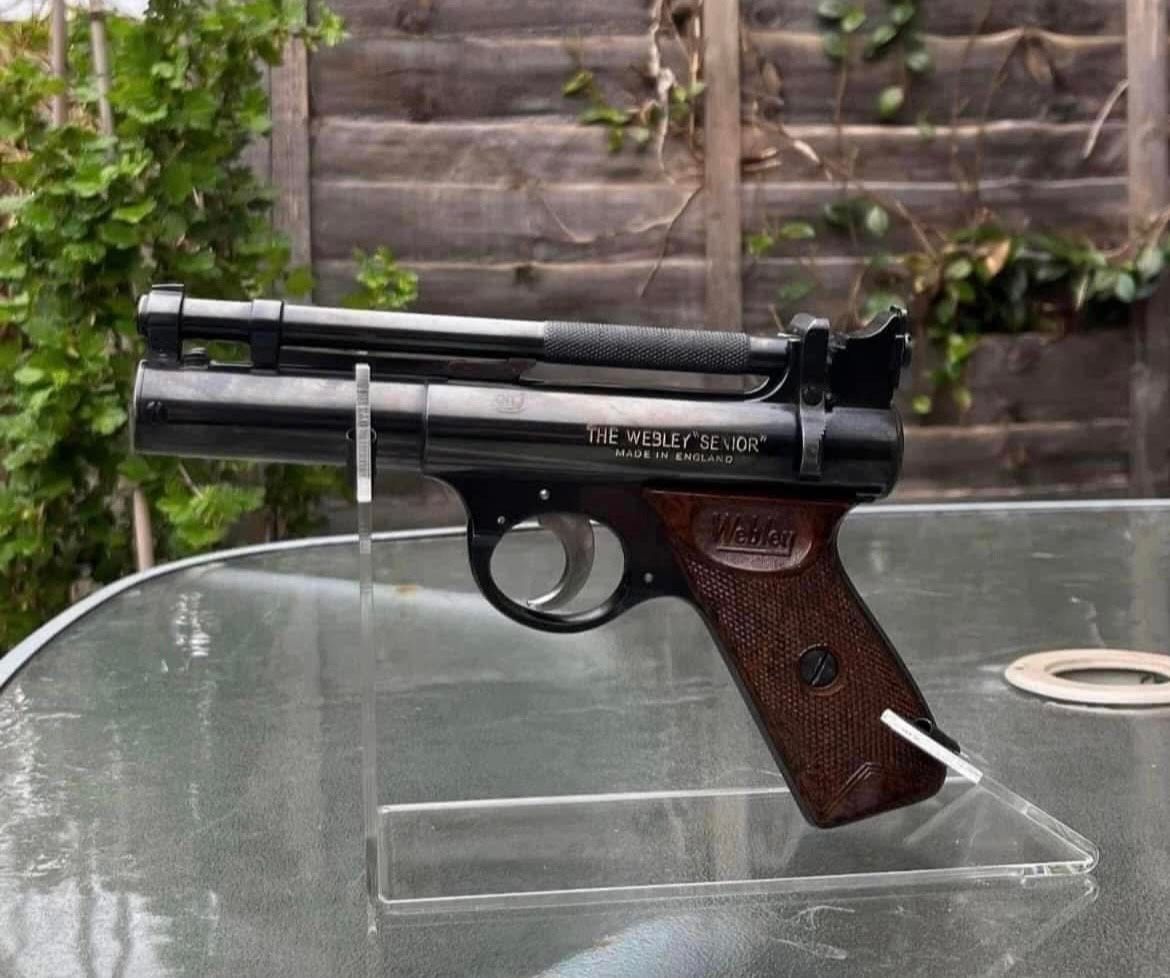
A good example comes from my own collection. Some years ago, I acquired a post-war Webley Junior that had suffered extensive damage to its spring guide, courtesy of a previous owner's less-than-sympathetic repair attempts. Rather than rushing into a repair, I put the pistol aside until a suitable replacement could be found.


Fortune eventually smiled when I purchased a large consignment of Webley parts. Among the contents was a spring guide in excellent condition bearing the same batch number as the damaged original. The pistol was subsequently serviced and returned to working order.


After enjoying it for a period, I eventually sold the pistol. Importantly, I informed the buyer exactly what had been done and included the damaged original spring guide with the sale. Whether that information remains with the pistol as ownership changes hands is, of course, another matter entirely.


Stories such as this illustrate why claims of complete originality should always be viewed in context. A replacement part fitted fifty years ago may itself now be considered part of the gun's history. Likewise, a carefully restored air gun may be mechanically superior to an untouched example while no longer being entirely original.


Perhaps the most accurate description for many vintage air guns is not original, but period-correct. The distinction may seem subtle, but for serious collectors it can be significant.


Ultimately, collecting and restoring vintage air guns remains one of the most rewarding aspects of the hobby. The history, engineering, and craftsmanship of these pieces continue to fascinate enthusiasts around the world. As with any collecting field, knowledge is one of the most valuable tools available. Seek advice when needed, research thoroughly before purchasing parts, and never be afraid to ask questions.


After all, today's restoration may well become tomorrow's collector's piece—and the details matter.

By Paul Angel July 24, 2026
Parts Due in or yet to be assessed or checked.
By Paul Angel July 21, 2026
Cold bluing is a simple and cost-effective way to restore the appearance of worn steel parts on air rifles and air pistols. While it will not be as durable as a professional hot-blued finish, it can produce excellent results when applied carefully and patiently.  Items You'll Need Cold bluing solution or gel. Degreaser (acetone works well). Fine wire wool (0000 grade). Clean cloths or paper towels. Nitrile gloves. Rust and blue remover (optional). Air gun or gun oil. Fine abrasive paper (240–1200 grit). Step 1 – Prepare the Metal Remove the existing finish using fine abrasive paper. If the metal has scratches or heavy corrosion, start with around 240-grit paper and gradually work up through finer grades, finishing with 600 to 1200 grit. Sand lengthways along the metal wherever possible. This produces a smoother, more traditional finish and helps avoid visible sanding marks. Ensure all rust, pitting residue, and old bluing have been removed before moving on. Step 2 – Degrease Thoroughly Using acetone and clean paper towels, wipe the bare metal until no dirt, oil, or dark residue remains. Any grease left on the surface can prevent the bluing solution from working properly. Step 3 – Warm the Metal Gently warm the metal using an oven, heat gun, or hair dryer until it feels hot to the touch but not excessively hot. Warming the metal helps the bluing solution react more evenly and can improve the final finish. Step 4 – Final Clean Give the warmed metal one final wipe with acetone to remove any fingerprints, dust, or contamination that may have appeared during handling. Step 5 – Apply the Bluing Solution Pour a small amount of cold bluing solution into a separate clean container. Never dip applicators directly into the original bottle, as contamination can reduce the effectiveness of the product. Using a cotton swab, cotton pad, or clean applicator, apply an even coat over the metal surface. Step 6 – Allow the Reaction to Work Leave the solution on the metal for the time recommended by the manufacturer, typically between one and three minutes. A grey or dark residue may appear on the surface. Once the reaction is complete, gently rub the metal with 0000-grade wire wool to smooth the finish. For a deeper colour, several light applications are usually better than one heavy application. Step 7 – Neutralise and Dry Rinse the metal thoroughly with cold water to stop the chemical reaction. Dry the surface completely using clean paper towels or a lint-free cloth. Once dry, lightly buff the metal with 0000-grade wire wool to remove any haze or uneven residue. Step 8 – Oil the Finish When you are satisfied with the colour and appearance, generously coat the metal with air gun or gun oil. Allow the oil to soak into the newly blued surface overnight. The following day, wipe away any excess oil with a clean cloth. This final step helps protect the finish and improves its durability. Safety Notes Cold bluing products contain chemicals that can be harmful if used incorrectly. Always work outdoors or in a well-ventilated area. Wear nitrile gloves and safety goggles at all times. Avoid skin and eye contact with the solution. Keep products away from children and pets. Protect work surfaces from spills by using a disposable, non-absorbent covering. Always follow the manufacturer's instructions supplied with your chosen bluing product. Final Thoughts Cold bluing is an excellent skill for collectors, restorers, and enthusiasts who want to improve the appearance of vintage air guns. The key to success is preparation. Taking extra time to remove rust, polish the metal, and thoroughly degrease the surface will usually have a greater impact on the final result than the bluing solution itself. Remember, patience produces the best finish.
By Paul Angel July 10, 2026
A Beginner's Guide to Renovating Wooden Air Rifle and Air Pistol Stocks.
By Paul Angel July 7, 2026
5 Common Problems Found in Vintage Spring-Powered Air Rifles and Pistols
By Paul Angel February 2, 2026
A Quick Guide To The Webley MK1.
By Paul Angel January 15, 2026
Webley Hurricane Dating and Series Differences.
By Paul Angel January 14, 2026
Webley Air Pistol Dating.