A Guide to The Webley And Scott Tempest.
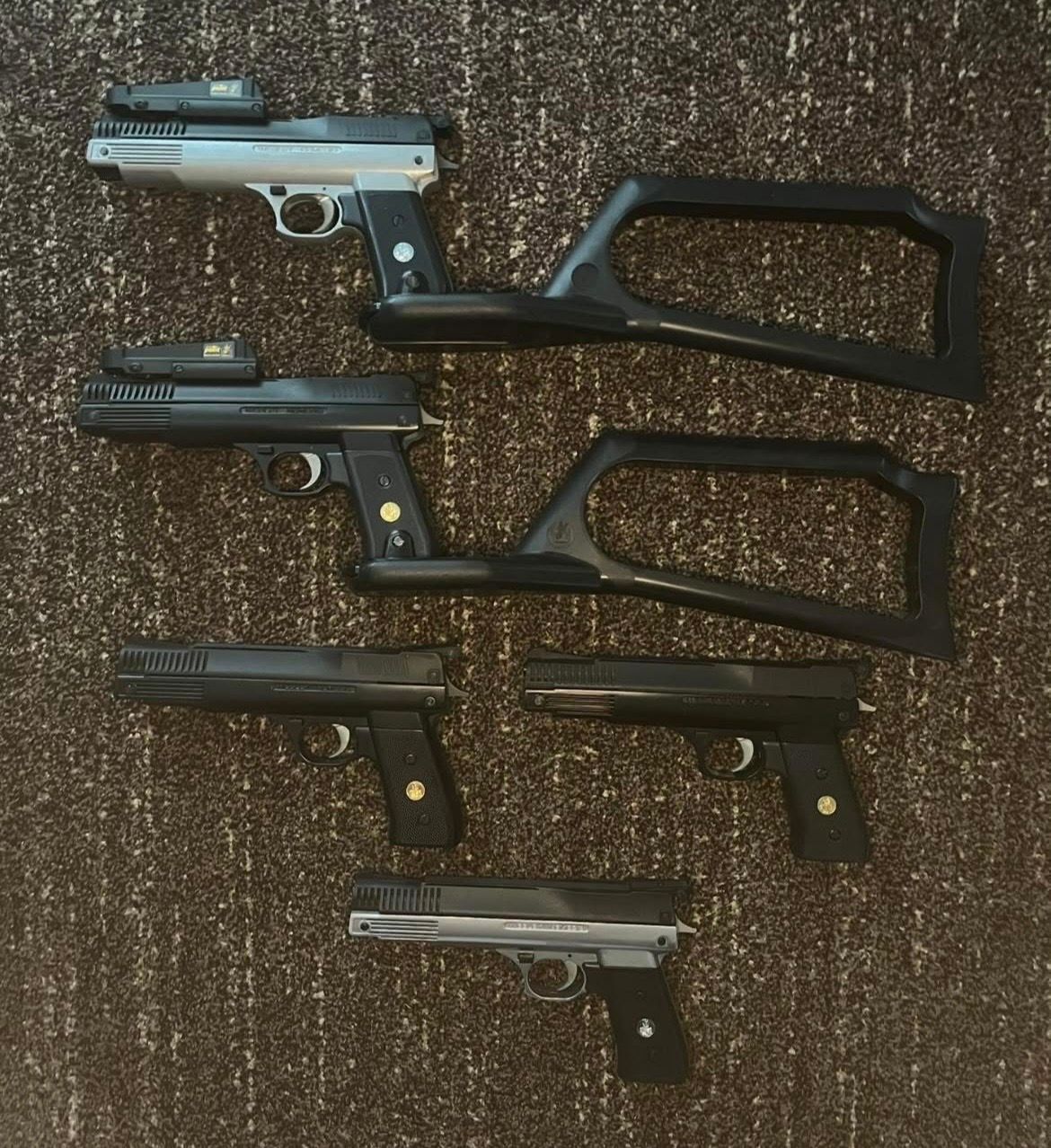
The Webley Tempest is one of the most recognisable modern Webley air pistols and, for many owners, one of the most nostalgic.
Introduced in 1979, the Tempest brought a more traditional, compact appearance back to the Webley range following the introduction of the Hurricane and Typhoon. It combined a familiar Webley profile with a break-barrel action, adjustable sights and a compact grip. For many collectors, the Tempest remains the Webley they remember from their younger days: a distinctive pistol that has stood the test of time.
The Birmingham Tempest – 1979 to 2005
The original Birmingham-made Tempest was produced from 1979 until the end of Webley's Birmingham manufacturing era in 2005.
The design followed the traditional Webley principle of a spring-piston mechanism housed within a compact alloy-bodied pistol. The barrel breaks open for cocking and loading, while the familiar Webley stirrup locking arrangement secures it for use.
Typical factory specifications include:
- Calibres: .177 and .22.
- Overall length: approximately 9.12 inches (232 mm).
- Barrel length: approximately 6.89 inches (175 mm).
- Weight: approximately 2 lb (0.9 kg).
- Action: single-shot, break-barrel, spring-piston.
- Sights: fixed foresight and adjustable rear sight.
- Other features: manual safety and adjustable trigger.
These figures are general reference specifications and may vary between versions.
Why the Tempest was different.
The Hurricane had a longer, more unusual appearance, with an extended sighting arrangement that gave it a rifle-like character. The Tempest returned to a more conventional pistol layout, making it visually distinct while retaining much of the same design philosophy.
The Tempest was compact enough to be marketed as a "pocket pistol", although this was advertising language rather than a recommendation to carry an air pistol in a pocket.
Identifying and dating a Birmingham Tempest.
One of the most useful features for collectors is the wording on the pistol's fore-end or shroud. Early production – approximately 1979 to 1981. Early examples carry the simpler TEMPEST marking. Factory identification is associated with earlier Birmingham wording, including "WEBLEY & SCOTT LTD BIRMINGHAM ENGLAND" on the underside of the fore-end.
Later Birmingham production – approximately 1981 to 2005
The marking changed to WEBLEY TEMPEST, accompanied by revised factory identification, including "WEBLEY & SCOTT LTD MADE IN ENGLAND". These changes provide a useful starting point when comparing pistols. However, they should be treated as approximate identification clues rather than a precise dating system.
When examining a Tempest, consider:
- The exact wording and location of factory markings.
- Whether the pistol is marked as made in England or Turkey.
- The calibre and condition of the original components.
- The grip and fore-end design.
- Any surviving original paperwork, instructions and packaging.
The Tempest should not be dated by simply applying the serial-number or batch-number methods used for many older Webley steel-bodied pistols. A number on an individual component does not necessarily provide a straightforward manufacturing year. For additional background, see the Angel Air Parts guide, A First Guide to Webley Air Pistol Dating.
Grips, sights and cosmetic variations.
The Tempest was available with plain black synthetic grips, while more decorative wood-effect plastic grips were also offered.
These variations are worth noting when comparing examples, particularly boxed pistols. However, a different grip does not necessarily indicate a different production year, and replacement grips may have been fitted during the pistol's lifetime. The adjustable rear sight is another important component to inspect. Missing sight elements, damaged adjustment screws or evidence of alterations can affect both usability and collector appeal.
Originality matters, particularly for early Birmingham examples. A clean, original pistol will often be more attractive to a collector than one that has been heavily refinished or modified, even if the latter looks cosmetically impressive.
From Birmingham to Turkey.
The end of Birmingham production in 2005 marked a significant change in Webley's history. Later Tempest pistols were manufactured in Turkey, with production commonly associated with the period from around 2011 onwards. Although the later pistols retained the familiar Tempest appearance, they should not automatically be considered identical to the earlier British-made models. Differences in construction, component dimensions and fittings can affect compatibility. Some replacement components may differ between Birmingham and Turkish versions, making identification particularly important when sourcing spare parts.
An important point for owners: establish which version you have before ordering replacement components. A part advertised simply as "Webley Tempest" may not fit every production variant.
When sourcing spares, provide photographs of the pistol, its markings and the component required. Measurements and identifying numbers can also help establish whether a part is suitable.
The Tempest Finale.
The Tempest Finale was marketed as a limited edition, with a reported worldwide production of 800 pistols across .177 and .22 calibres.
It retained the recognisable Tempest layout but was presented as a special closing edition of the classic design. Its limited production makes it an interesting variation for collectors, particularly when accompanied by original packaging and documentation. Before paying a premium, check the specific edition markings and confirm that the pistol is complete and correctly represented.
The Tempest Centennial.
The Centennial Tempest is a separate collector variation associated with the 100th anniversary of Webley's first airgun patent in 1910.
A 2010 edition was produced in a special presentation case, with numbered examples and accompanying documentation. Published auction descriptions identify a worldwide production of 2,000 pistols. The Centennial should not be confused with the Finale. They are distinct editions, and their markings, presentation cases and accompanying paperwork are relevant to identification.
For collectors, the condition and completeness of these presentation sets can be as important as the pistol itself.
Packaging and accessories.
Over its production life, the Tempest appeared in different forms of packaging, including polystyrene inserts with cardboard lids and later presentation-style cases. The Turkish-era Centennial edition introduced a distinctive presentation case, while other later examples may be found with different packaging. Original instructions, certificates, accessories and packaging can increase a pistol's appeal, especially when everything remains together. Nevertheless, a box is supporting evidence rather than proof of age or originality. Packaging can be swapped, and pistols may have been reunited with boxes from different examples.
For collectors, the strongest evidence comes from consistent markings, believable condition, appropriate documentation and a clear understanding of the model concerned.
Five common Tempest problems
A Tempest may now be several decades old, so age-related deterioration is worth considering even when the exterior looks excellent.
1. Worn piston seal
A deteriorated seal can contribute to reduced or inconsistent performance. Poor performance does not automatically mean that the mainspring needs replacing; several internal components may require assessment.
2. Mainspring deterioration
After many years, the mainspring may weaken or become damaged. Cocking feel and performance can change, but these symptoms should be assessed alongside the condition of the seals and other components.
3. Breech seal deterioration
The breech seal can harden, flatten or become damaged over time. This may allow air to escape when the pistol is fired.
4. Barrel locking mechanism wear
The Tempest's barrel locking arrangement is an important part of its design. Excessive wear, damage or an unreliable lock should be treated seriously.
Do not use a pistol if the barrel fails to lock securely. Have the mechanism inspected by a suitably experienced airgun specialist.
5. Sights, safety and trigger problems
Rear sights can become loose or damaged, while dirt, wear or previous incorrect adjustment can affect the safety and trigger mechanisms. Avoid attempting to correct trigger problems through indiscriminate adjustment. If the safety or trigger does not operate reliably, stop using the pistol until it has been inspected.
General maintenance and ownership.
The Tempest benefits from sensible routine care rather than unnecessary dismantling.
Exterior care: Wipe the pistol with a clean, soft cloth after handling. Keep metal surfaces dry and use only a suitable, light protective treatment where appropriate.
Lubrication: Avoid excessive oil or grease. Incorrect lubrication can cause problems, and unsuitable petroleum-based products should not be introduced into the compression chamber.
Storage: Store the pistol in a dry environment to reduce corrosion and deterioration of grips, seals and packaging. Keep it securely stored and inaccessible to unauthorised people.
Routine inspection: Look for corrosion, damaged grips, loose sights, deterioration around the breech and signs of previous repairs. Check for visible damage to the barrel locking arrangement without forcing or adjusting it.
Internal servicing: Spring-piston mechanisms contain components under tension. If the pistol needs internal servicing, use a competent airgun specialist familiar with the relevant version.
With an older Tempest, originality is worth preserving. Replacing worn consumable components is often sensible, but unnecessary refinishing, modification or substitution of original parts can reduce collector interest.
How much is a Webley Tempest worth?
Values depend on condition, functionality, calibre, originality, production version and whether the original box and accessories survive.
UK auction results can provide useful reference points. For example, a boxed Tempest was reported sold for £147 at Holts in December 2025, while a cased Centennial-related example with custom grips was reported sold for £320 at Wilson55 in April 2026. The latter was a special presentation example and should not be treated as representative of a standard Tempest.
These examples illustrate why it is important to distinguish an ordinary pistol from a complete or unusual collector's example.
Indicative UK collector values.
The following are broad guide estimates, not guaranteed sale prices or formal valuations.
Condition or versionIndicative valuePoor condition, incomplete or requiring repair£30–£60Fair, used example with visible wear£50–£85Good, complete Birmingham Tempest£75–£120Very good, original example£100–£150Very good boxed example with accessories£130–£200Particularly clean early example or desirable variation£150–£225+Finale or Centennial presentation example£175–£300+, depending on completeness and demand
These ranges overlap deliberately. A boxed pistol with damaged components may be worth less than an unboxed example in excellent original condition. Exceptional presentation sets or unusual variations can exceed the guide, but premiums should be supported by comparable sales. Auction hammer prices are not the same as a dealer's retail asking price. Buyer's premiums, delivery arrangements and the cost of any required servicing should be considered when comparing results.
For Angel Air Parts, the distinction between collector value and parts value is also important. A pistol purchased for dismantling needs to be assessed according to the condition and resale demand of its individual components, rather than simply its potential value as a complete example.
Why the Tempest remains popular
More than four decades after its introduction, the Tempest continues to occupy an interesting position in Webley's history. It offered a more compact alternative to the Hurricane, retained the company's familiar design character and remained in production through a period of significant change. Its later Turkish production and special editions added further chapters to the story. For some owners, the Tempest is simply an enjoyable piece of traditional airgun design. For others, it represents a first air pistol, a remembered shooting experience or a particular period of British manufacturing.
Its continuing appeal lies in that combination of recognisable styling, practical engineering and nostalgia. For collectors and restorers, understanding the differences between production versions is especially important. Correct identification helps preserve originality, supports sensible purchasing decisions and ensures replacement parts are selected with care.
At Angel Air Parts, we believe maintaining these older pistols is about more than keeping an item in working order. It is also about preserving the knowledge, components and history that make each model worth remembering.
Angel Air Parts – preserving the parts, history and knowledge behind classic air guns.