The Webley Nemesis.
The Webley Nemesis Air Pistol - A Forgotten Classic of Modern Webley Manufacture.
Among Webley & Scott’s later air pistols, the Nemesis is perhaps one of the most overlooked. Introduced in 1994, it represented a significant departure from the traditional all-steel air pistols that had established Webley’s reputation, yet it remains an interesting and distinctive addition to any collection. With its unusual design, single-stroke pneumatic action and a range of finishes, the Nemesis deserves considerably more attention than it receives.
Production and History.
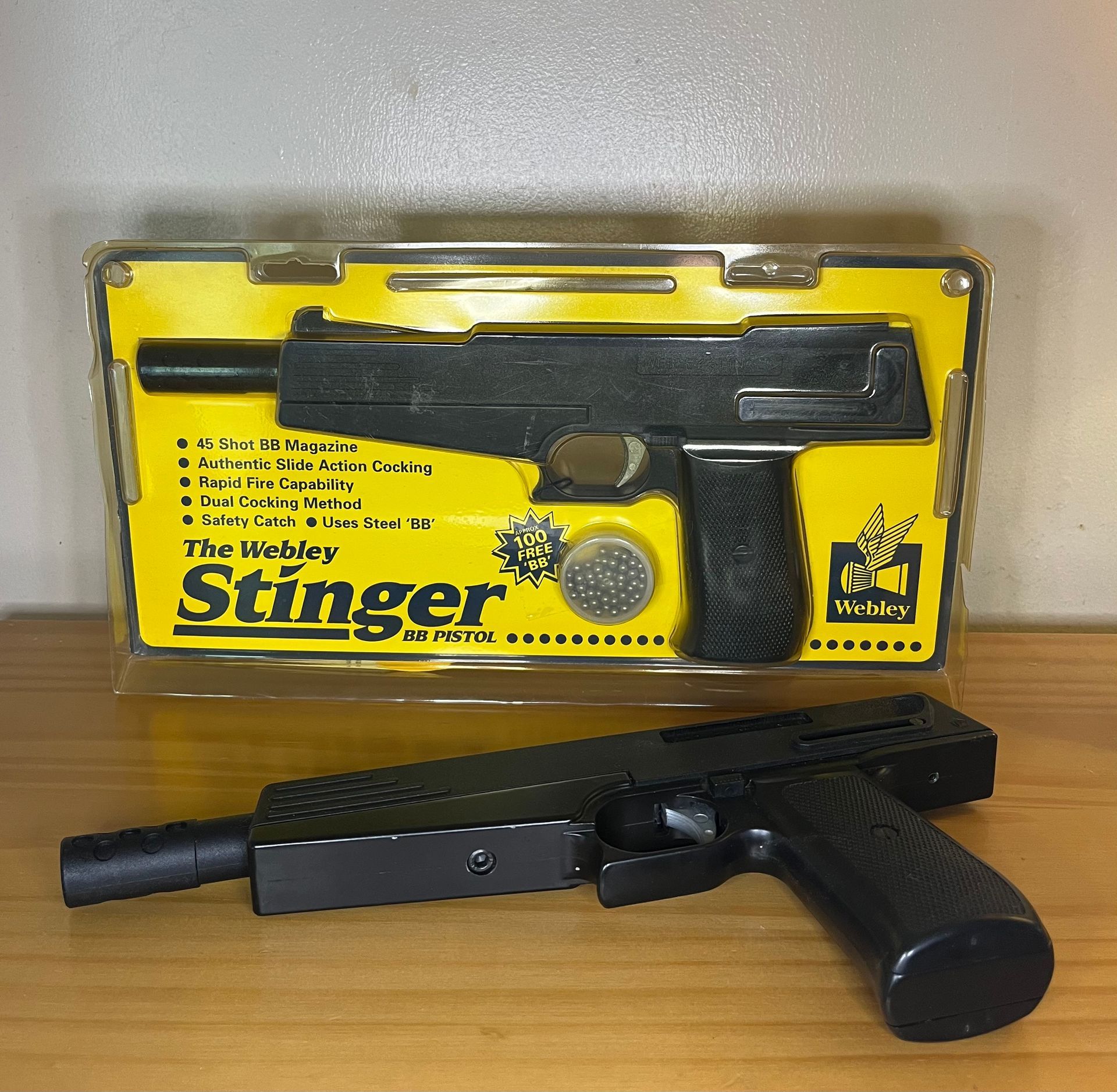
The Webley Nemesis was manufactured from 1994 until the closure of Webley’s Birmingham factory in 2005. Alongside the Hurricane, Stinger and Tempest, it formed part of the final generation of air pistols produced by Webley & Scott in England. Designed by Chris Dunn and Harold Resuggan, the Nemesis was developed during a period when the airgun market was changing. Modern designs, new materials and alternative power systems were becoming increasingly popular, and Webley needed to remain competitive. For traditional Webley collectors, the move away from the solid-steel construction of earlier models was not universally welcomed.
However, the market was moving forward, and the Nemesis demonstrated Webley’s willingness to embrace new ideas while retaining its own identity.
A Different Approach – Single Stroke Pneumatic Power.
Although the Nemesis shares some of the general layout of other Webley pistols, its power system is fundamentally different. Rather than relying on a conventional mainspring, the Nemesis uses a single-stroke pneumatic (SSP) mechanism. Opening the barrel assembly draws air into the compression chamber. Returning the assembly to its closed position compresses that air, ready for firing. When the trigger is pulled, a valve releases the stored air to propel the pellet. This arrangement offers two notable advantages. Firstly, the absence of a heavy spring being released reduces the mechanical disturbance associated with firing. Secondly, the trigger mechanism does not have to release a powerful mainspring, contributing to a lighter and more refined firing experience.
The result is a pistol with a notably different character from the traditional spring-powered Webley's. Its firing cycle is comparatively smooth and free from the pronounced movement associated with many spring-piston designs.
Construction and Design.
The Nemesis combines metal components with alloy and plastic mouldings, reflecting the manufacturing methods and design priorities of the period. Its substantial frame gives the pistol a somewhat bulky appearance, while the grips have a pronounced, almost Browning-like feel. The ergonomics are quite different from those of the classic Webley Senior or Premier, and the Nemesis will appeal to some hands more than others. The pistol also incorporates a grooved mounting provision for an optional telescopic sight. This added versatility made the Nemesis suitable for a variety of target-shooting applications.
Although its appearance divided opinion, the design was practical and contemporary for its time. The Nemesis was not intended to be a reproduction of a classic Webley; it was an attempt to produce a modern sporting air pistol under a famous British name.
Finishes, Colours and Special Editions.
One of the most interesting aspects of the Nemesis is the variety of finishes in which it was produced. These variations provide collectors with an additional challenge, particularly when searching for examples in original condition.
The principal finishes and reported variations include:
- Black: The standard finish, giving the pistol a conventional sporting appearance. Early black examples used an electrophoretic coating, while later production moved to an epoxy-type finish.
- Bright Silver: Introduced in September 1994, this finish gave the Nemesis a distinctly different appearance from the standard black model.
- Bright Silver Special Edition: A special-edition version associated with the National Exhibition Centre show in October 1994.
- Grey or Dull Silver: Introduced in 1996, offering a more subdued alternative to the bright silver finish.
- Red, Yellow, Orange and Green: Coloured versions introduced in January 1996.
- Gold-plated presentation examples: Particularly desirable collector’s pieces, with reports of extremely limited production.
The coloured Nemesis pistols are especially intriguing. Their introduction was partly prompted by the Pony Club, which wanted pistols for shooting events at gymkhanas that looked less like conventional firearms. The bright colours provided a more appropriate appearance for these events and allowed different teams to use different colours. Production of the coloured versions ceased in December 2000. They were produced in relatively small numbers, and examples in good original condition are now particularly interesting to collectors. The gold-finished presentation pistols are another fascinating part of the Nemesis story. Very few are known, and examples accompanied by their original presentation cases are especially desirable.
Collectors should exercise caution when identifying unusual finishes. A bright silver example, a special-edition pistol and a gold-plated presentation piece are not necessarily the same variant, and original finish should always be distinguished from later refinishing.
The Aim Brace – Turning the Nemesis into a Carbine.
An unusual accessory available for the Nemesis was the Aim Brace. This attachment allowed the pistol to be converted into a carbine-style configuration, providing additional support and a different shooting experience. Importantly, the accessory was designed to fit without drilling the pistol. This was a useful advantage over certain other Webley accessories, where fitting could involve permanent alteration. For collectors, an original Aim Brace is an interesting accessory in its own right, particularly when accompanied by its original packaging.
As with many accessories produced for older airguns, finding one today can be more difficult than finding the pistol itself.
Original Packaging.
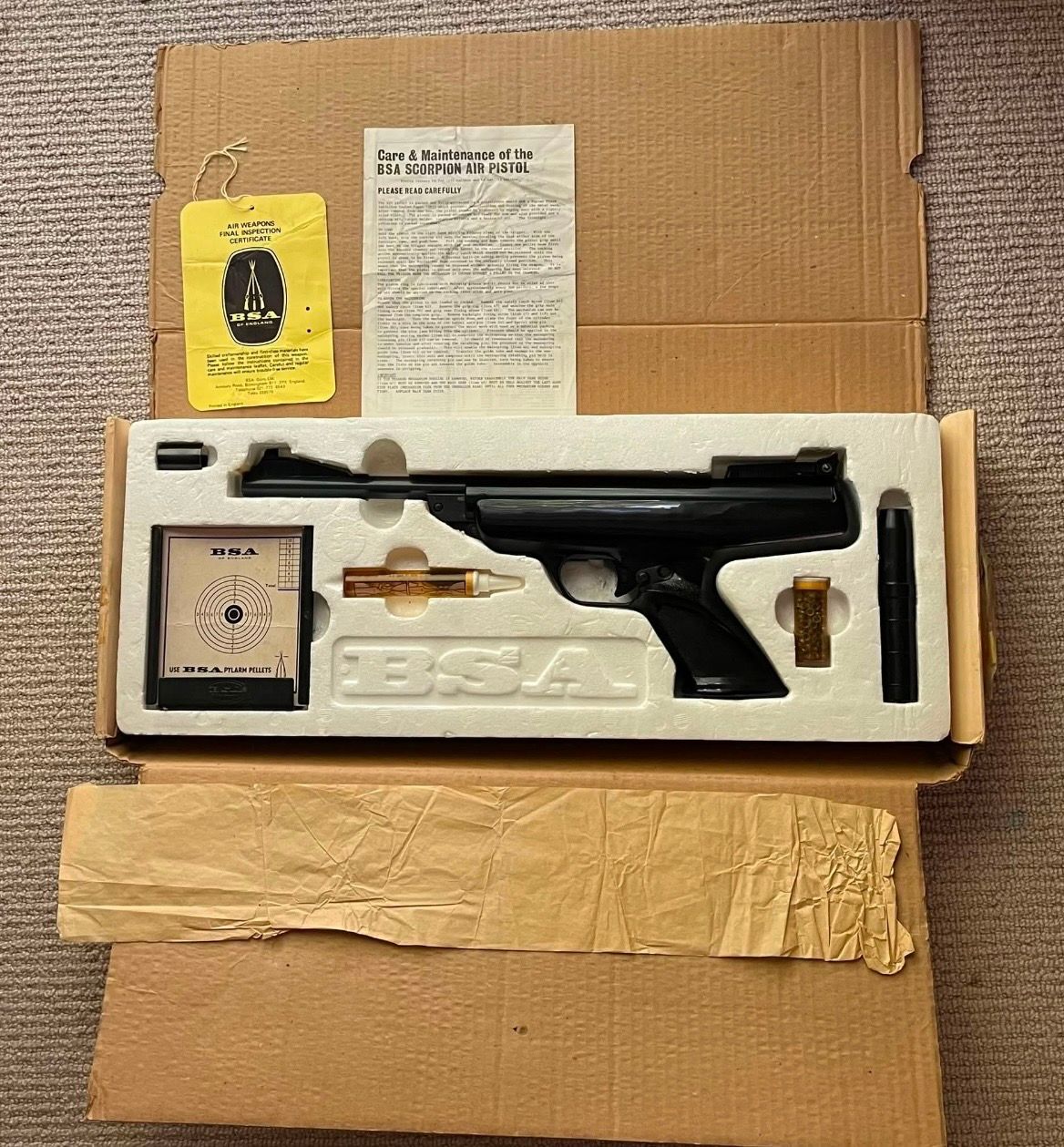
The Nemesis was supplied in more than one type of packaging during its production life. Early examples were available in a distinctive clear plastic clam-shell pack. These are particularly attractive to collectors because they display the pistol and its finish, although the plastic can become discoloured, brittle or damaged with age. When supplies of the clam-shell packaging were exhausted, Webley moved to a plain brown cardboard box with a polystyrene insert. This change took place around 2003–2004.
Original packaging can add considerably to the appeal of a complete example, particularly for the less common coloured and special-edition models. However, packaging alone should not be treated as definitive evidence of a pistol’s age or originality.
Maintenance and Ownership
The Nemesis is now an older air pistol, and age-related deterioration should be considered before purchasing one for regular use. Its pneumatic action avoids the conventional mainspring system, but it still relies on seals, valves and other components to retain and release compressed air correctly. A pistol that has been stored for many years may require professional inspection before being returned to service. Original finishes and plastic components also deserve careful treatment, as unnecessary dismantling or aggressive cleaning can permanently reduce a collector’s value.
Five Things to Check When Buying a Webley Nemesis.
Air retention and performance: A loss of power or an inability to retain air may indicate deterioration of internal seals or valve components. A pistol’s external condition does not necessarily reflect the condition of its pneumatic system.
Breech and sealing surfaces: Inspect the breech area and accessible sealing surfaces for damage, deterioration or signs of previous interference. Poor sealing can affect performance.
Barrel assembly and locking mechanism: Check for excessive play, damage or signs that the barrel assembly does not close and lock correctly. Wear around moving components can affect both operation and consistency.
Trigger and safety: The trigger and safety should be checked for correct operation. Any uncertainty about their function warrants examination by a suitably qualified airgun technician.
Condition, originality and previous repairs: Look carefully at the finish, grips, mouldings and fastenings. Signs of rough dismantling, replacement components or refinishing may affect both value and originality. On coloured and special-edition models, preserving the original finish is particularly important.
These are inspection points rather than a claim that every Nemesis suffers from the same faults. A well-preserved example may remain in excellent condition, while another of similar age may require considerable attention. Internal repairs should be left to someone experienced with the Nemesis mechanism. For collectors, retaining original components and avoiding unnecessary modifications is always preferable.
A Collectable Webley Worth Rediscovering.
The Webley Nemesis occupies an interesting position in the company’s history. It represents the transition from the traditional steel-bodied Webley air pistol towards the more modern materials and mechanisms that were becoming increasingly common during the 1990s. Its single-stroke pneumatic action, distinctive styling, optional Aim Brace and unusual range of finishes make it much more than simply another late-production Webley.
For collectors, the coloured Pony Club models, silver special editions and gold-plated presentation examples provide additional reasons to seek out this often-overlooked pistol. Original packaging and accessories can make an already interesting example considerably more appealing. Although it may never enjoy the same universal recognition as the Senior, Premier or Tempest, the Nemesis remains an important part of Webley’s later Birmingham production history.
For Angel Air Parts, it is a reminder that the history of classic airguns does not end with the traditional designs. The later models, their accessories and the parts that keep them functioning are equally deserving of preservation.
Angel Air Parts – preserving the parts, history and knowledge behind classic air guns.