A Guide to The Webley And Scott Hurricane.
The Webley Hurricane Air Pistol – Identification, Dating, Ownership and Maintenance Guide.
Introduction.
The Webley Hurricane is an important part of the later history of British air pistol manufacture. Introduced in 1977, it was produced in Birmingham until 2005 and represented a more modern approach to the traditional Webley air pistol. Unlike the earlier all-steel Webley models, the Hurricane used an alloy body with a steel compression cylinder. Its distinctive appearance, adjustable rear sight, substantial proportions and break-barrel action helped establish its identity among collectors and shooting enthusiasts. Although the Hurricane remained in production for nearly three decades, it underwent a number of changes during its lifetime. These differences can help establish the approximate age of a pistol, but identifying an individual example is not always straightforward. Replacement parts, repairs and mixed-period components can make dating difficult.
This guide covers the main identification features, production changes, ownership considerations, routine maintenance, common problems and approximate values to help collectors and owners better understand this classic Webley.
A brief history of the Webley Hurricane.
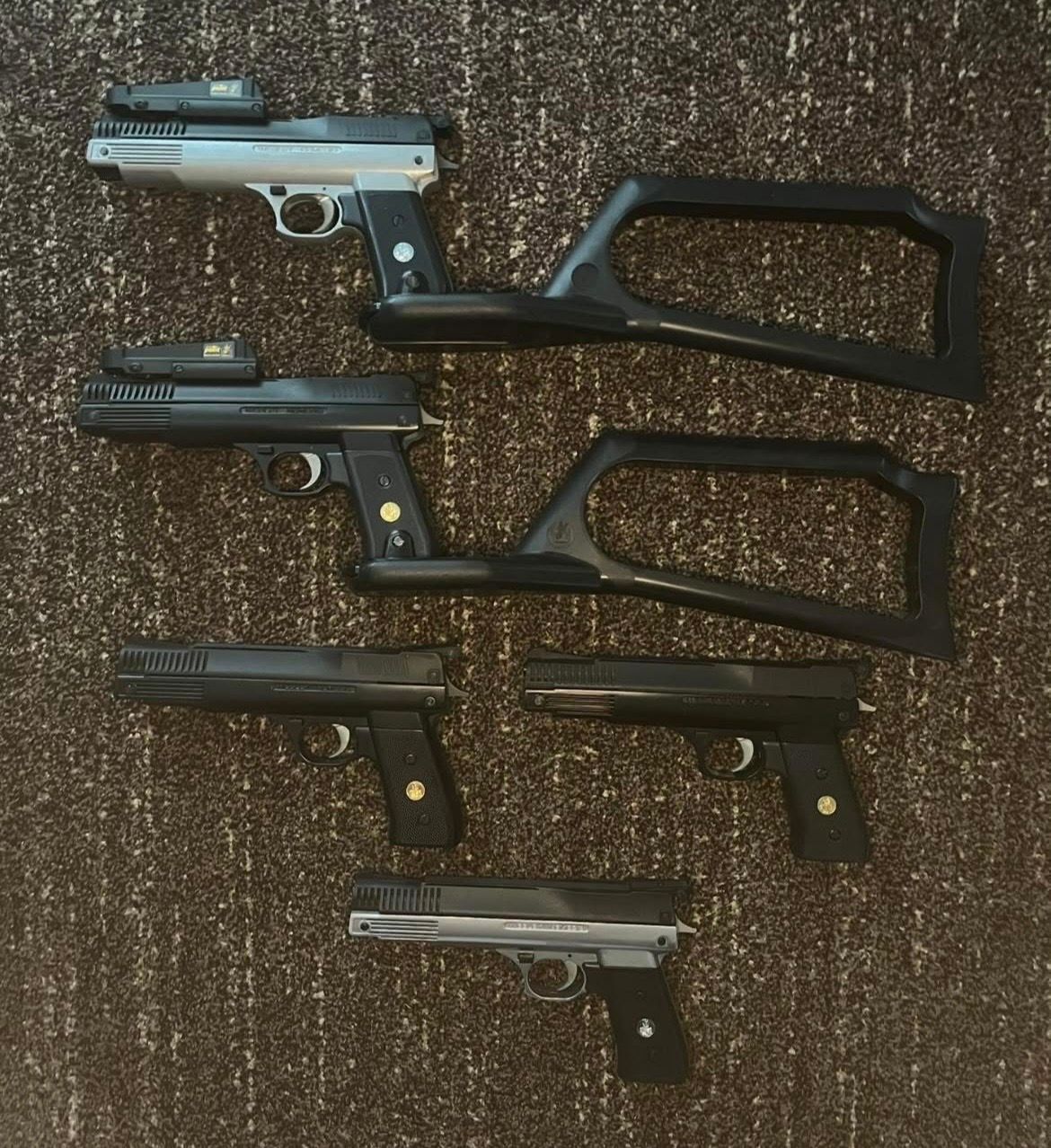
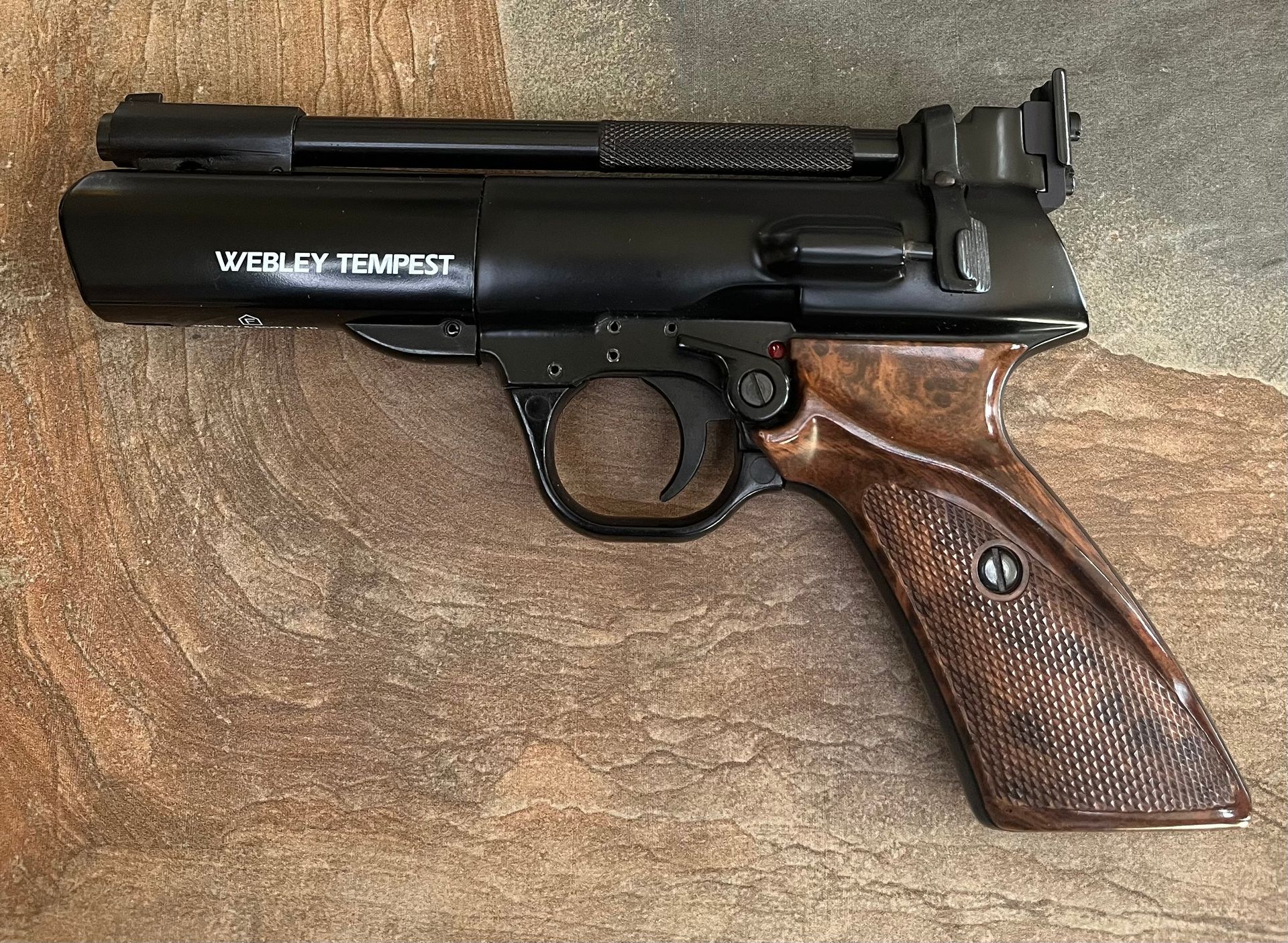
The Hurricane arrived in 1977, following the earlier Webley Premier and Premier Mark II models. It formed part of a new generation of alloy-bodied Webley air pistols that included the Typhoon and, subsequently, the Tempest. The Hurricane was designed around a conventional spring-powered break-barrel mechanism. Its external appearance was more modern than that of the traditional steel-bodied Webley pistols, while retaining the company's familiar emphasis on a solid, substantial feel. Production continued until 2005, making it one of Webley's longest-running modern air pistol designs. During this period, changes were made to the body, sights, barrel housing, markings and packaging. The Hurricane's long production run means that examples can vary considerably in appearance, even when they are mechanically similar.
It is worth remembering that a pistol's production date and its present condition are two different things. An early Hurricane that has seen considerable use may be less desirable than a later example that has been carefully preserved with its original accessories.
Identifying and dating your Webley Hurricane.
One of the most important points when dating a Hurricane is to begin with the pistol's body rather than relying solely on its other components. Many external parts are interchangeable between production periods. Consequently, a replacement front shroud, rear sight or barrel assembly may not belong to the original pistol.
1977–1984: Early body design.
The first series of Hurricanes featured a triangular-shaped safety marking with a red dot. Early examples also had a front shroud marked simply Hurricane, rather than Webley Hurricane. From 1977 to approximately 1982, the original packaging was a large black pistol box with a red flocked insert, designed to accommodate the pistol and its accessories. The packaging was subsequently changed to a plain cardboard box with a polystyrene insert. These early boxed examples can be particularly appealing to collectors, especially when the contents and accessories appear consistent with the original outfit.
1984–2005: Later body design.
From 1984, the safety marking changed to a drilled indentation filled with red paint. This is one of the most useful features for distinguishing the two main body series. However, this should not be treated as proof of an exact manufacturing year. The marking identifies a production feature, not a precise date, and the body may have undergone repair or refinishing.
Front shroud markings.
Early examples carried the Hurricane name alone. From 1981, the marking changed to Webley Hurricane. This provides a useful additional reference point when examining a pistol, although the shroud can be replaced independently of the body.
Rear sight changes.
The rear sight also changed during production. Early models, from 1977 to approximately 1987, featured white numbering on the adjustment dials. The design was subsequently changed to a raised style with black numbering. A rear sight can help establish whether the components are consistent with an early or later pistol, but it should never be used as the sole dating reference.
Barrel housing and front sight.
In 1990, the precast barrel housing was shortened from approximately 2.75 inches to 2.187 inches, giving the front end a stockier appearance. The front sight blade was also increased in height during 1990. These changes are useful when comparing examples, particularly where the body marking and other features suggest a later production period.
Markings, batch numbers and export examples.
Most Webley air pistols of this period were identified using batch numbers rather than the traditional serial numbers associated with many earlier models. Some export Hurricanes were issued with serial numbers, so the presence of a serial number should not automatically be interpreted as evidence of a different model or a particular production year. When dating an example, consider the body design, safety marking, shroud inscription, sights, barrel housing and original paperwork together.
For further information, see our companion article, A First Guide to Webley Air Pistol Dating.
Ownership: what to look for when buying a Hurricane.
The Hurricane remains an appealing pistol for collectors, but prospective owners should assess condition and originality before making a purchase.
Check the external condition.
Inspect the alloy body for cracks, impact damage, corrosion around exposed steel components and evidence of poor repairs. Examine the finish carefully, particularly around edges and areas that may have been repeatedly handled. Check the grips for cracks, missing sections, damaged chequering or signs of replacement. A little cosmetic wear is normal on a pistol that has been used for decades. Excessive refinishing, however, can reduce collector interest, especially where original markings have been obscured.
Examine the sights and barrel assembly.
Check that the front sight, adjustable rear sight and barrel housing appear secure and appropriate for the pistol. Misaligned sights, damaged adjustment mechanisms or obvious mismatches between components deserve further investigation.
Because parts can be exchanged between examples, an apparently correct sight or barrel assembly does not necessarily establish originality.
Check the action and safety.
The barrel should move through its intended action without obvious abnormal looseness, grinding or binding. Do not attempt to overcome a stiff action by applying excessive force. A problem may indicate wear, damage or an internal fault requiring professional attention.
The safety mechanism should be inspected by a competent person. Never assume that a safety catch is effective simply because it moves.
Look for original accessories.
Depending on the original outfit, accessories may include the presentation box, instructions, adjustment tools, targets, a scope mount or other supplied items. Completeness can improve a pistol's appeal, but accessories should be checked for authenticity and suitability rather than assumed to be original because they fit.
A well-preserved box and matching paperwork can be particularly useful when documenting a collector's example.
Regular maintenance and care.
A Webley Hurricane is now a vintage air pistol, and even a well-preserved example may contain seals, springs and other components affected by age. Good maintenance begins with careful storage and regular visual inspection rather than unnecessary dismantling.
1. Keep the exterior clean.
Wipe the pistol with a soft, dry cloth after handling to remove moisture, fingerprints and surface dirt. Pay particular attention to exposed steel parts, which may be vulnerable to corrosion. Avoid abrasive materials and aggressive polishing compounds that can damage the original finish or markings.
2. Store it in suitable conditions.
Store the pistol in a dry environment with reasonably stable temperatures. Avoid damp sheds, condensation-prone cupboards and prolonged exposure to direct sunlight. Where a pistol is stored in a case or box, make sure the storage environment is dry. A damp presentation box can cause more harm than leaving the pistol in a suitable dry storage arrangement.
3. Do not lubricate indiscriminately.
Avoid pouring oil into the barrel, compression chamber or other internal areas in an attempt to improve performance. Incorrect lubricants can damage seals, contaminate internal components or create mechanical problems. Use only products and methods appropriate to the specific mechanism and recommended by a competent airgun technician.
4. Have age-related problems assessed.
A pistol that has not been used for years may have deteriorated seals, weakened springs or other internal wear.
If the action feels abnormal, the pistol leaks air, or performance has become inconsistent, seek an assessment from someone familiar with vintage Webley air pistols. Do not continue operating a pistol that shows signs of mechanical failure.
5. Avoid unnecessary restoration.
Original finish, markings and correctly matched components are important to collectors. Before undertaking restoration, consider whether cleaning and stabilising the existing condition would be preferable to refinishing. Keep a record of any repairs and retain original components where practical. For collectors, documented and sympathetic maintenance is often more desirable than an extensive cosmetic overhaul.
Common problems encountered with the Webley Hurricane.
Age, storage conditions and previous repairs can all influence the condition of an individual pistol. The following are sensible points to investigate when assessing a used example.
1. Deteriorated seals.
Age-related seal deterioration can cause loss of compression or inconsistent performance. A pistol that has been stored unused for many years should not automatically be assumed to be mechanically sound.
2. Spring and internal wear.
Repeated use and prolonged storage can affect internal components. Unusual noises, binding or inconsistent action warrant a professional inspection rather than repeated attempts to operate the mechanism.
3. Loose or damaged sights.
The adjustable rear sight may have damaged adjustment parts or show signs of previous repair. Check its condition and whether the components appear appropriate to the pistol's production period.
4. Damage to the alloy body.
Impact damage, cracks and previous attempts at repair can affect both appearance and structural integrity. Particular care is needed when assessing damage around loaded or moving components.
5. Incorrect replacement parts.
This is especially relevant to collectors. A pistol may contain a mixture of early and late components, making it difficult to establish originality from external appearance alone. Where originality matters, record the visible differences and compare them with reliable reference material before purchasing replacement parts.
Approximate UK valuations.
The Hurricane is an established collector's model, but its value depends on condition, originality, calibre, completeness and current demand. The following figures are broad indicative estimates for the UK market, not formal valuations. They are intended as a starting point for private-sale comparisons, and actual prices can vary.
- Poor condition or incomplete example: approximately £30–£60.
- Fair, used example: approximately £50–£90.
- Good condition, complete working example: approximately £80–£130.
- Very good, largely original example: approximately £120–£180.
- Excellent boxed example with original accessories and paperwork: approximately £150–£250 or more in particularly desirable cases.
These ranges overlap deliberately. An example with serious mechanical faults may be worth less than a cosmetically worn but sound pistol, while a complete original outfit may attract a premium. Recent auction results illustrate this variation. A Hurricane sold for £50 in September 2024, another sold for £80 in May 2025, and a boxed example with accessories sold for £110 in January 2026. A separate auction example with its original box and paperwork achieved £211 in April 2026. Dealer asking prices can be higher than completed auction prices, and asking prices should not be mistaken for confirmed sale values.
Before buying or selling, compare like-for-like examples and take account of condition, completeness, any mechanical faults and the costs associated with the sale.
Collectability and long-term ownership.
The Hurricane's appeal lies partly in its long production history and the number of changes made over nearly three decades. For some collectors, an early example with the original red flocked presentation box is especially attractive. Others prefer a clean, later pistol that reflects the final stages of Birmingham production. There is also interest in studying the differences between the Hurricane, Typhoon and Tempest, particularly where shared design features and interchangeable components can complicate identification.
The most rewarding examples are not necessarily the most expensive. A correctly identified, well-documented pistol in honest condition can be a worthwhile addition to a collection, even if it shows the marks of ordinary use.
Final thoughts.
The Webley Hurricane is more than a modern-looking alloy air pistol. It represents a significant chapter in the development of British air pistols, bridging traditional Webley design principles with the materials and styling of a later generation. Dating one accurately requires patience, especially because replacement parts can disguise the original production features. The body should remain the starting point, with the sights, markings, barrel housing and packaging used as supporting evidence.
For owners, careful storage, sensible maintenance and an understanding of age-related faults will help preserve these pistols for future collectors. Whether you are buying your first Hurricane, restoring an existing example or researching the differences between production periods, taking the time to understand the details is part of the enjoyment.
If you have a question about identifying a particular Webley Hurricane or sourcing an appropriate spare part, Angel Air Parts will endeavour to assist wherever possible.
Angel Air Parts – preserving the parts, history and knowledge behind classic air guns